Human Rights Reporting System
Secure case documentation system with evidence capture, encrypted storage, case-tracking workflows and trend analysis, built for CEHURD.
The problem
Human rights documentation is dangerous to hold and useless if it cannot be found. Cases were being recorded in documents and spreadsheets on individual laptops: a laptop that is lost or seized takes the evidence with it, and a case referred to a lawyer arrives as an email thread nobody can reconstruct. Meanwhile nobody could see patterns across cases, which is where the advocacy value actually is.
What I built
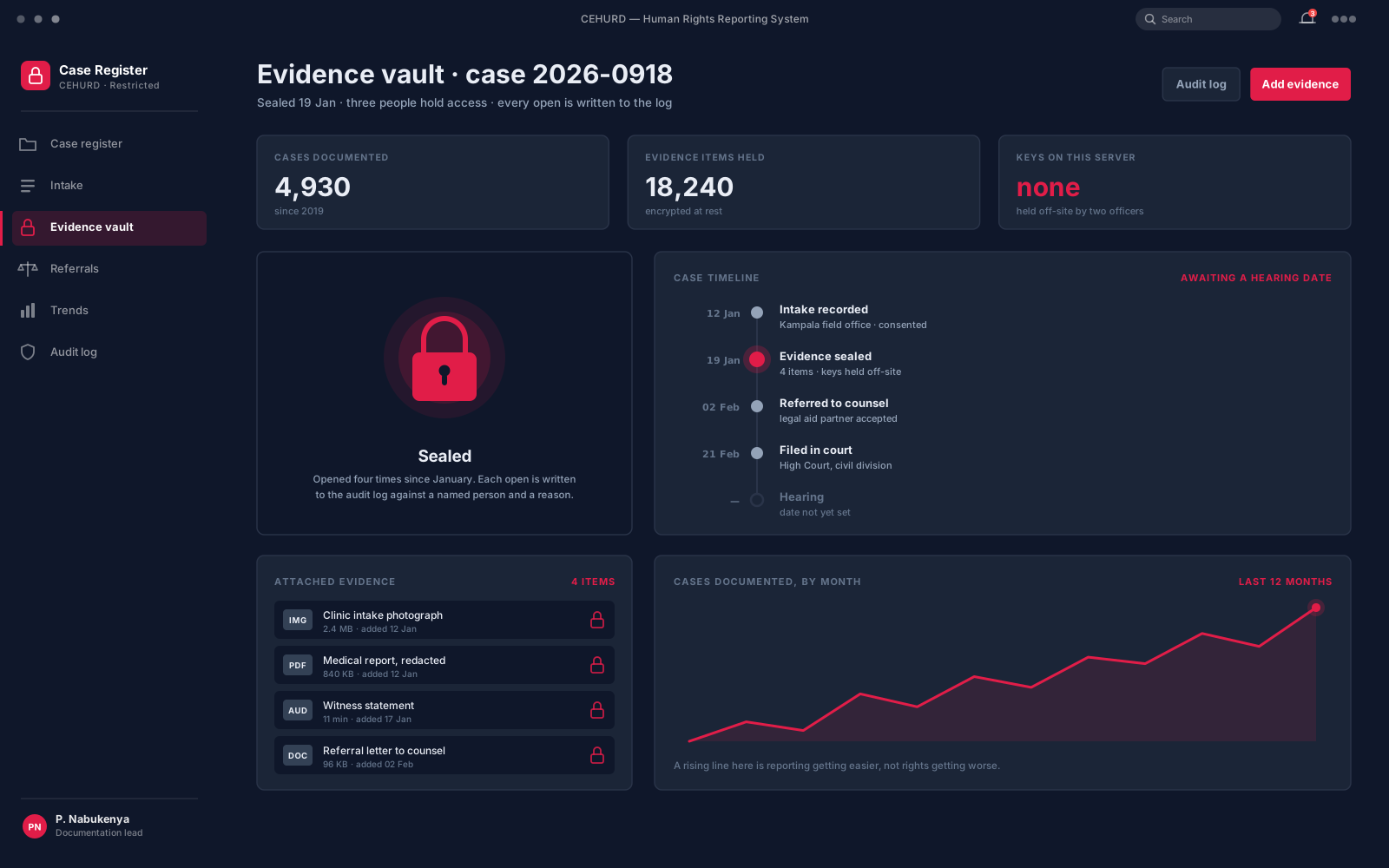
One case register with a sealed evidence vault behind it. Everything about a case lives in one place, encrypted, with access held by named people, and every open written to an audit log. Then, on top of that, the trend analysis that turns individual cases into an argument.
How it works
Intake records the case once, with consent, and issues an identifier that follows it to court.
Evidence (photographs, medical reports, audio statements, letters) is attached to the case and encrypted at rest.
Access is held by named people. Opening a sealed item is written to the audit log against that person and a stated reason.
The case moves through a tracked workflow: intake, sealed, referred to counsel, filed, heard. Nothing advances without leaving a record.
Trend dashboards aggregate across cases by type, district and time, so documentation becomes evidence for advocacy rather than a filing cabinet.
What it had to survive
The threat model is real
This data can put people at risk, so encryption, key custody and access logging were the first decisions rather than a later hardening pass.
Keys are not held on the platform
Somebody who takes the server does not thereby have the evidence.
Field intake
Documentation happens away from the office, so capture works there and syncs afterwards.
Court usefulness
Documentation that cannot be produced coherently to a lawyer has failed, so export was designed alongside capture.
What it does
Delivered
- Evidence capture with encrypted data storage.
- Case-tracking workflows for human rights documentation.
- Trend-analysis dashboards for CEHURD.
Built with
Want to see it work?
Most of these run inside a ministry, a hospital or an NGO and are not open to the public. I can walk you through the real thing on a call and answer whatever you want to poke at.