ICT for Persons with Disabilities Observatory
Nationwide database and resource platform with analytics dashboards for disability-inclusive policy formulation, with the Uganda Communications Commission and NUDIPU.
The problem
Policy about persons with disabilities was being made without data about persons with disabilities. Nobody could say how many people in a given district had a hearing impairment, how many owned a phone they could actually use, or whether last year's programme changed anything. Arguments were won by whoever spoke most confidently.
What I built
Build the evidence base, and publish it. A nationwide database collected with the disability associations themselves, with dashboards designed so that a policy officer who is not a statistician can find the number they need and cite it.
How it works
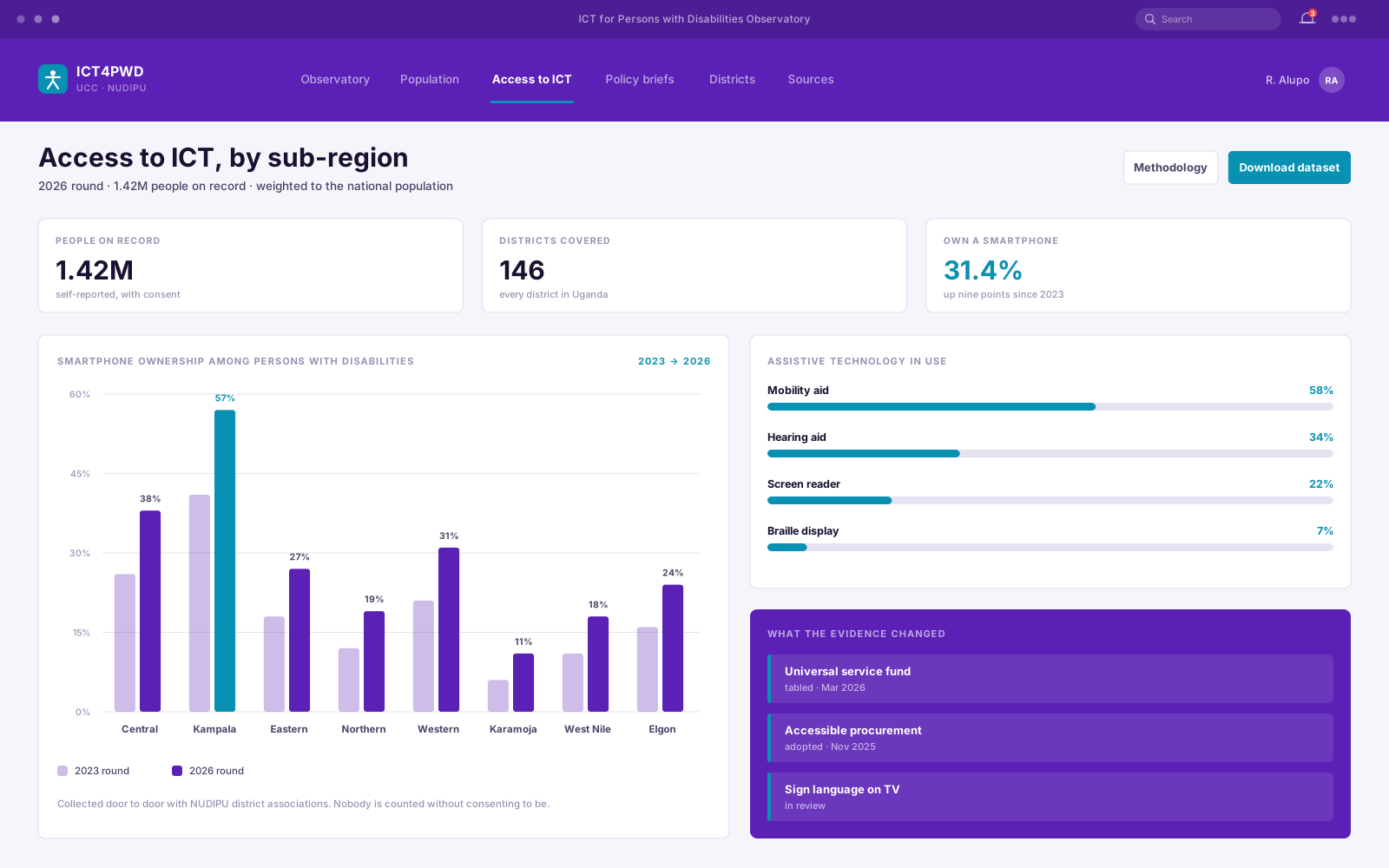
Data is collected door to door with NUDIPU district associations, by people the communities already know, not by strangers with clipboards.
Nobody is recorded without consenting to be, and what each record is for is explained at the point it is taken.
Responses are weighted to the national population, so a sub-region with fewer respondents does not vanish from the picture.
Dashboards break access to ICT down by sub-region, by type of disability and by round, so change over time is visible rather than asserted.
The dataset is downloadable with its methodology attached, because evidence nobody can check is not evidence.
What it had to survive
The platform itself has to be accessible
A disability observatory that a screen reader cannot read would be an embarrassment, so contrast, keyboard use and semantics were requirements, not polish.
Consent and dignity
These are records about people, held with their agreement, and the system is built to make that agreement real rather than assumed.
National coverage
All 146 districts, including the ones that are hardest and most expensive to reach. The ones usually left out are the point.
Comparability
Rounds have to line up with each other, so question wording and weighting are fixed rather than improved between rounds.
What it does
Delivered
- Nationwide database and resource platform.
- Data analytics dashboards for policy formulation.
- Built with the Uganda Communications Commission and NUDIPU.
Built with
Want to see it work?
Most of these run inside a ministry, a hospital or an NGO and are not open to the public. I can walk you through the real thing on a call and answer whatever you want to poke at.